Mobilier sur mesure










Comment sont fabriqués les meubles de restaurant sur mesure : le guide complet des usines
Introduction – Pourquoi la fabrication de mobilier de restauration est-elle importante ?
Le mobilier de restaurant ne se résume plus simplement à des tables et des chaises. Dans les restaurants, cafés, hôtels, bars, chaînes de restaurants spécialisés dans le « hot pot » et autres établissements de restauration modernes, le mobilier influe directement sur le confort des clients, l’ambiance du lieu, l’efficacité opérationnelle et l’identité de marque.
De nombreux restaurateurs accordent une grande importance à la décoration intérieure, mais négligent un facteur essentiel : la façon dont le mobilier professionnel est fabriqué. Un mobilier de mauvaise qualité se traduit souvent par des tables bancales, des coussins affaissés, des panneaux de bois fissurés, des structures instables, un entretien difficile et une durée de vie réduite.
C'est pourquoi de plus en plus d'entreprises préfèrent désormais travailler avec un fabricant de mobilier de restaurant sur mesure au lieu d'acheter des meubles destinés au grand public ou des produits génériques vendus en gros.
Un professionnel usine de mobilier de restaurant Nous proposons des dimensions sur mesure, des matériaux professionnels résistants, des sièges au design ergonomique, ainsi qu’une production OEM/ODM à grande échelle pour les restaurants, les cafés, les espaces de restauration d’hôtels, les bars et les projets de chaînes.
Ce guide explique en détail comment sont fabriqués les meubles de restaurant sur mesure, quels sont les matériaux les plus importants et comment les restaurants peuvent choisir des solutions d'ameublement professionnel fiables pour assurer leur succès à long terme.
Pourquoi les restaurants optent-ils pour la fabrication sur mesure de mobilier de restauration ?
Les espaces de restauration professionnels présentent des exigences opérationnelles spécifiques auxquelles le mobilier domestique standard ne peut pas répondre.
Le mobilier de restaurant doit résister à :
- Une forte affluence quotidienne de clients
- Nettoyage et désinfection réguliers
- Renversements d'aliments et exposition à l'humidité
- Taux de rotation élevé des places assises
- Longues heures de fonctionnement
- Mouvements fréquents et usure
Comme l'agencement de chaque restaurant est différent, les dimensions standard du mobilier entraînent souvent un gaspillage d'espace au sol ou réduisent le nombre de places assises.
La fabrication sur mesure de mobilier de restaurant permet aux établissements de restauration d'optimiser :
- Disposition des places assises dans les cabines
- Dimensions des chaises de salle à manger
- Dimensions des tables
- Espacement des passerelles
- Densité d'occupation
- Cohérence de l'identité visuelle en intérieur
Pour les chaînes de restaurants et les projets dans le secteur de l'hôtellerie-restauration, la fabrication sur mesure garantit également une cohérence visuelle entre les différents établissements.
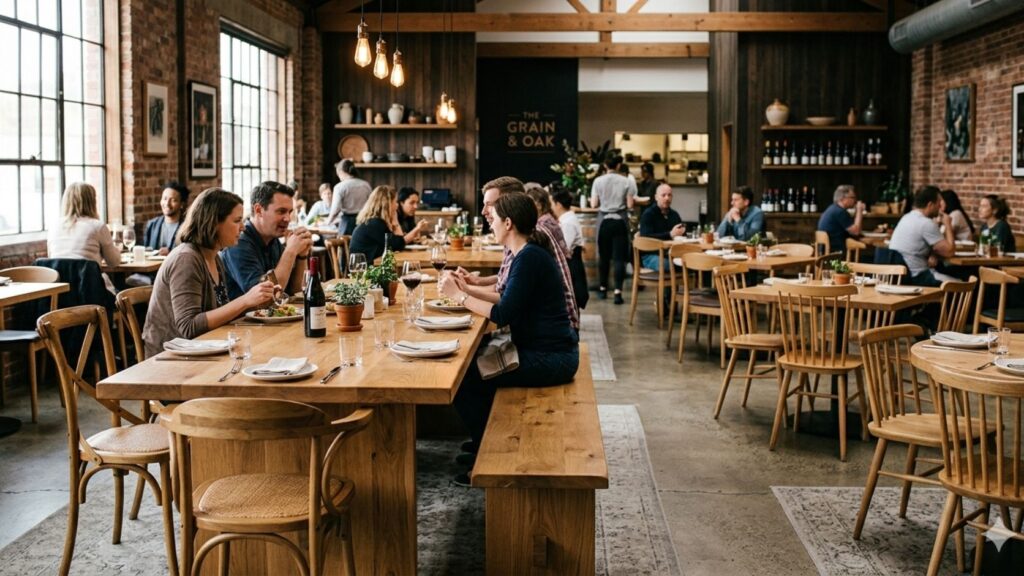
Étape 1 – Planification de l'agencement du restaurant et conception du mobilier
Avant le début de la production, un professionnel fabricant de mobilier de restaurant commence par étudier l'environnement du restaurant.
Les ingénieurs d'usine évaluent généralement :
- Concept de restaurant
- Objectifs en matière de capacité d'accueil
- Flux de circulation des clients
- Exigences relatives à l'espacement des tables
- Style d'intérieur de la marque
- Besoins en matière de confort ergonomique
Par exemple :
Mobilier de café
Les cafés exigent souvent :
- Textures de bois chaleureuses
- Rembourrage moelleux
- Configurations compactes des sièges
- Une esthétique adaptée aux réseaux sociaux
Mobilier pour restaurants de restauration rapide
Les établissements de restauration rapide privilégient :
- Durabilité
- Nettoyage rapide
- Sièges compacts
- Rendement élevé en termes de rotation
Mobilier pour hôtels et restaurants
Le mobilier de salle à manger des hôtels met généralement l'accent sur :
- Finitions haut de gamme
- Dispositions modulaires
- Sellerie de luxe
- Sièges multifonctionnels
À ce stade, les fabricants fournissent souvent :
- dessins CAO
- Maquettes en 3D
- Rendus de mobilier
- Recommandations en matière d'aménagement de l'espace
Une bonne planification permet de réduire le gaspillage d'espace et d'améliorer la rentabilité d'un restaurant.
Étape 2 – Choix des matériaux pour le mobilier de restauration professionnelle
Le choix des matériaux est l'une des principales différences entre le mobilier résidentiel et mobilier de restauration professionnel.
Les matériaux de mauvaise qualité s'abîment rapidement dans les restaurants.
Matériaux pour structures en bois
Les essences de bois couramment utilisées pour le mobilier de restaurant sont notamment :
Bois massif
Recommandé pour :
- Restaurants de luxe
- Hôtels
- Cafés
Avantages :
- Une allure haut de gamme
- Grande résistance
- Texture naturelle
Contreplaqué commercial
Largement utilisé pour :
- Places assises dans les loges
- Meubles rembourrés
- Structures de chaises de salle à manger
Épaisseur recommandée :
| Composant de mobilier | Épaisseur recommandée |
|---|---|
| Châssis de stand | 12 à 18 mm |
| Structure de la chaise | 12 à 15 mm |
| Panneau de support de table | 18 à 25 mm |
Le contreplaqué de qualité commerciale offre une meilleure résistance à l'humidité et une meilleure stabilité dimensionnelle.
Matériaux utilisés pour les armatures métalliques
Le mobilier de restaurant comprend souvent :
- Acier inoxydable
- Acier thermolaqué
- Cadres en fer
- Aluminium
Épaisseur de cadre recommandée :
| Type de cadre | Épaisseur recommandée |
|---|---|
| Structure de chaise | 1,2 à 1,5 mm |
| Pied de table | 1,5 à 2 mm |
| Assistance sur le stand | 1,5 à 2 mm |
Des cadres plus solides limitent les vibrations et prolongent la durée de vie.
Étape 3 – Densité de la mousse et fabrication des revêtements
Le confort est l'un des facteurs les plus importants dans la fabrication de mobilier de restaurant.
De nombreuses chaises de restaurant bon marché finissent par ne plus tenir la route, car la mousse à faible densité s'affaisse au bout de quelques mois seulement.
Densité de mousse recommandée
| Type de mobilier | Densité recommandée |
|---|---|
| Sièges de type « booth » dans un restaurant | 35 à 40 kg/m³ |
| Chaises de salle à manger | 30 à 35 kg/m³ |
| Sièges d'hôtel | 35 à 45 kg/m³ |
| Sièges au bar | 30 à 35 kg/m³ |
La mousse haute densité améliore :
- Confort d'assise
- Stabilité dimensionnelle
- Durabilité commerciale
- Satisfaction client
Matériaux d'ameublement
Voici quelques options de revêtement courantes :
Cuir synthétique
Idéal pour :
- Restaurants
- Chaînes de restauration rapide
- Restaurants spécialisés dans le hot pot
Avantages :
- Nettoyage facile
- Étanchéité
- Des prix abordables
Revêtement en tissu
Idéal pour :
- Cafés
- Restaurants d'hôtel
- Espaces de restauration haut de gamme
Avantages :
- Aspect plus doux
- Une sensation haut de gamme
- Plus d'options de texture
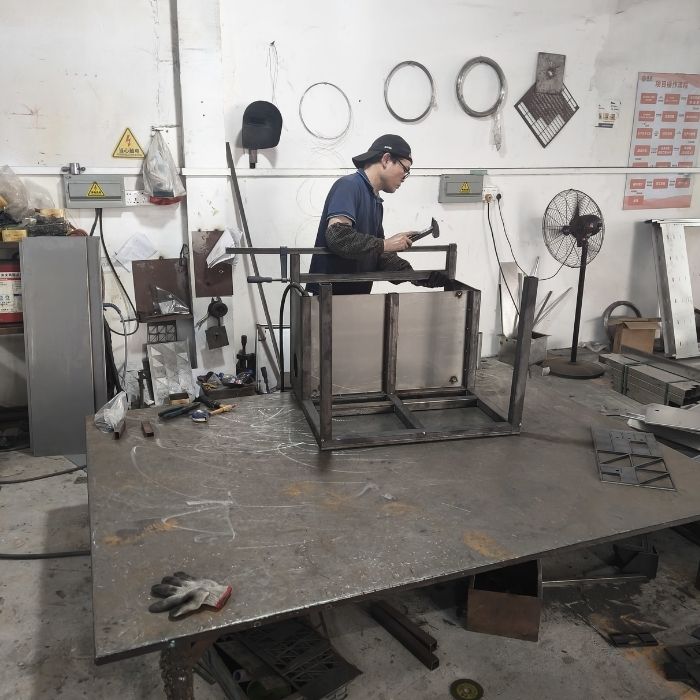
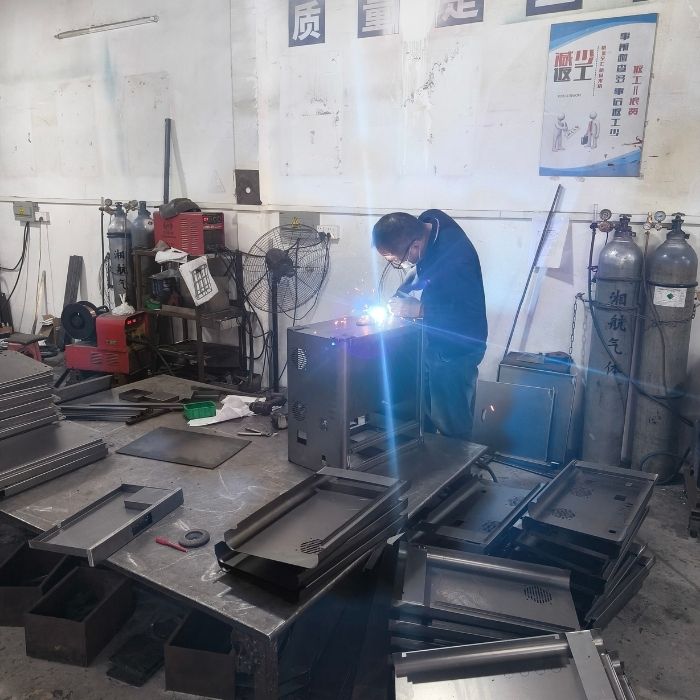
Étape 4 – Découpe, soudage et fabrication du châssis
Une fois les matériaux sélectionnés, la fabrication commence.
Les panneaux de bois sont découpés à l'aide de systèmes CNC pour garantir une grande précision.
Les montures métalliques subissent les étapes suivantes :
- Découpe au laser
- Cintrage de tubes
- Soudage
- Meulage
- Finition des surfaces
À ce stade, les usines veillent à ce que :
- Stabilité du châssis
- Soutien du poids
- Dimensions constantes
- Bords lisses
Une soudure de mauvaise qualité est souvent à l'origine du vacillement des chaises de restaurant ou de leur rupture en cas d'utilisation intensive dans un cadre professionnel.
Les fabricants spécialisés dans le mobilier de restauration renforcent les assemblages afin d'assurer une plus grande durabilité.
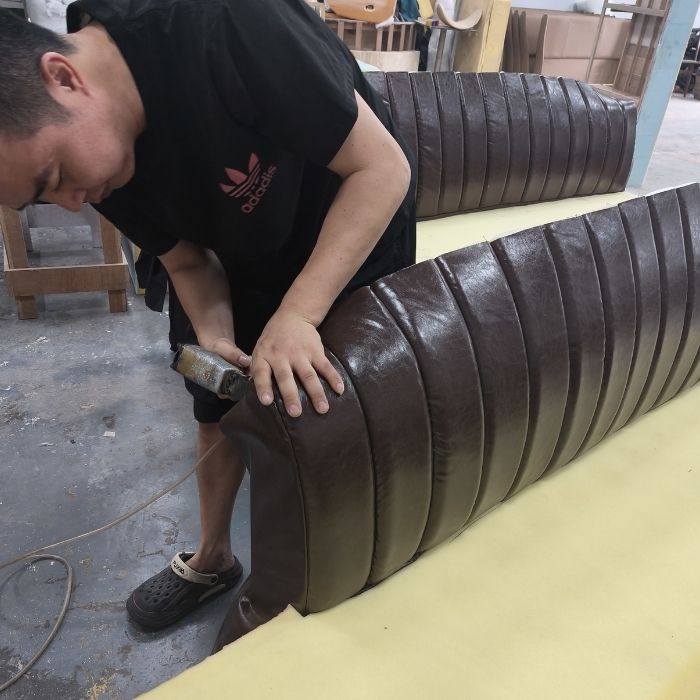
Étape 5 – Rembourrage et assemblage
Une fois les structures internes terminées, la fabrication des revêtements commence.
La mousse est découpée aux dimensions précises et appliquée sur :
- Places assises dans les loges
- Chaises de salle à manger
- Tabourets de bar
- Sièges de salon
- Mobilier de hall d'hôtel
Les employés doivent ensuite remplir :
- Couture
- Emballage en tissu
- Mise en forme des coussins
- Finition des bords
Le soin apporté aux détails du revêtement influe fortement sur la perception de la qualité du mobilier.
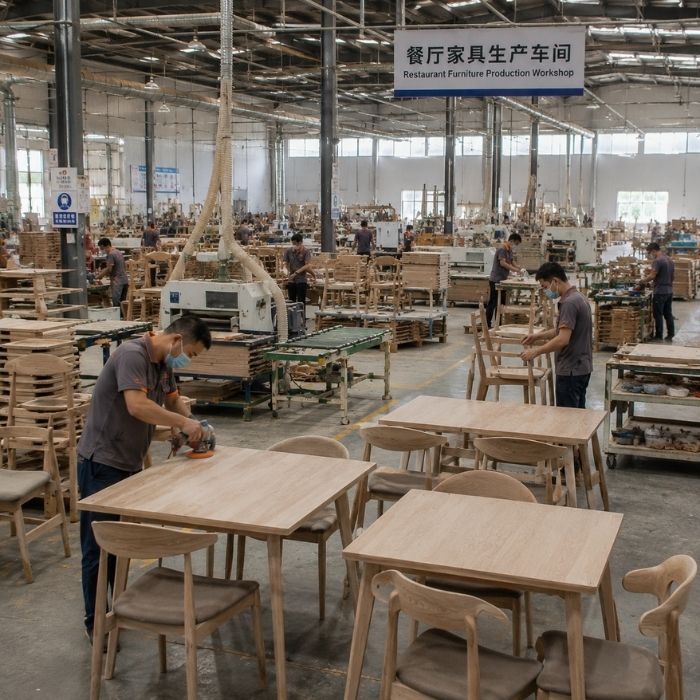
Étape 6 – Contrôle qualité et essais en conditions réelles
Fiable fabricants de mobilier de restaurant mettre en place un contrôle qualité rigoureux avant l'expédition.
Les tests habituels comprennent :
Essais de capacité de charge
Les chaises à usage professionnel doivent résister à une utilisation intensive et répétée.
Essais de stabilité
On vérifie que les tables et les chaises ne vacillent pas.
Essais de récupération de la mousse
Permet aux coussins de conserver leur élasticité.
Inspection de surface
Vérifications :
- Rayures
- Traces de soudure
- Défauts de revêtement
- Irrégularités de peinture
Contrôle dimensionnel
Garantit la cohérence des lots pour les projets de chaînes de restaurants.
Un contrôle qualité rigoureux permet de réduire au minimum les problèmes après-vente.
Les erreurs courantes commises par les restaurateurs lors de l'achat de mobilier
De nombreux projets de restauration échouent parce que les décisions d'achat de mobilier se basent uniquement sur le prix ou l'aspect esthétique.
Choisir son mobilier d'intérieur
Les meubles de maison ne présentent généralement pas la même résistance que ceux destinés à un usage professionnel.
Négliger l'ergonomie
Une hauteur d'assise inadaptée ou un angle d'inclinaison du dossier inconfortable nuisent au confort du client.
Dimensions recommandées :
| Article | Spécifications recommandées |
|---|---|
| Hauteur du siège | 43 à 46 cm |
| Profondeur d'assise | 48 à 50 cm |
| Angle du dossier | 100°–105° |
| Épaisseur du coussin | 5 à 8 cm |
Acheter de la mousse à faible densité
Mousse en dessous 25 kg/m³ s'effondre rapidement.
Ne pas respecter les consignes d'entretien
Le mobilier doit permettre :
- Nettoyage rapide
- Résistance à l'humidité
- Réparation facile
Les meilleurs types de mobilier de restaurant pour les projets commerciaux
Les usines spécialisées dans le mobilier de restauration fabriquent généralement :
Sièges de restaurant (banquettes)
Idéal pour :
- Restaurants
- Chaînes de restaurants spécialisées dans le « hot pot »
- Restauration rapide et décontractée
Avantages :
- Une meilleure protection de la vie privée
- Optimisation de l'espace
- Une allure haut de gamme
Mobilier de café
Choix les plus populaires :
- Fauteuils rembourrés
- Tables de salle à manger en bois
- Systèmes de sièges compacts
Mobilier de bar
Comprend généralement :
- Tabourets de bar
- Sièges de salon
- Tables à structure métallique
Mobilier de hall d'hôtel
Conditions requises :
- Sellerie haut de gamme
- Des finitions élégantes
- Durabilité à long terme
Pourquoi faire appel à un fabricant de mobilier de restaurant sur mesure ?
Les fabricants professionnels proposent :
- Personnalisation OEM et ODM
- Matériaux de qualité professionnelle
- Aide à la planification de l'agencement
- Capacité de production en grande série
- Contrôle qualité constant
- Solutions d'emballage pour l'exportation
Cela permet aux chaînes de restauration de garantir une qualité constante tout en réduisant les coûts de remplacement à long terme.
Résumé final des éléments à prendre en compte pour l'achat
Lors du choix d’un usine de mobilier de restaurant sur mesure, concentrez-vous sur :
| Article | Recommandation |
|---|---|
| Densité de la mousse | 30 à 40 kg/m³ |
| Hauteur du siège | 43 à 46 cm |
| Épaisseur du contreplaqué | 12 à 18 mm |
| Épaisseur de la structure en acier | 1,2 à 2 mm |
| Sellerie | De qualité professionnelle |
| processus de contrôle qualité | Obligatoire |
Un mobilier de bonne facture apporte les avantages suivants :
- Confort du client
- Identité visuelle d'un restaurant
- Efficacité de nettoyage
- Durée de vie des meubles
- Taux d'occupation des places assises
- Rentabilité à long terme
Mais surtout, un mobilier de restaurant de qualité contribue à offrir une meilleure expérience culinaire et à améliorer les performances opérationnelles.
À propos du fabricant de mobilier de restauration
En tant que professionnel fabricant de mobilier de restaurant, nous proposons des solutions tout-en-un pour :
- Sièges de type « booth » dans un restaurant
- Chaises de salle à manger
- Tables de salle à manger sur mesure
- Mobilier de café
- Mobilier de hall d'hôtel
- Mobilier de bar
- Fabrication de mobilier de restauration en OEM et ODM
De la conception ergonomique du mobilier à la fabrication de qualité professionnelle, nous aidons les restaurants, cafés, hôtels et projets du secteur de l'hôtellerie-restauration à créer des espaces de restauration durables, confortables et esthétiquement harmonieux, adaptés aux besoins du marché mondial.