Mobiliário à medida










Como é fabricado o mobiliário personalizado para restaurantes: o guia definitivo sobre as fábricas
Introdução – Por que razão a produção de mobiliário para restaurantes é importante
O mobiliário de restaurante já não se resume apenas a mesas e cadeiras. Nos restaurantes, cafés, hotéis, bares, cadeias de restaurantes especializados em hot pot e espaços de restauração comerciais modernos, o mobiliário influencia diretamente o conforto dos clientes, o ambiente do espaço, a eficiência operacional e a identidade da marca.
Muitos proprietários de restaurantes dedicam grande atenção à decoração de interiores, mas ignoram um fator crucial: a forma como o mobiliário comercial é fabricado. O mobiliário mal fabricado conduz frequentemente a mesas instáveis, almofadas deformadas, painéis de madeira rachados, estruturas instáveis, dificuldades de manutenção e uma vida útil curta do produto.
É por isso que, atualmente, cada vez mais empresas preferem trabalhar com um fabricante de mobiliário personalizado para restaurantes em vez de comprar mobiliário destinado ao uso doméstico ou produtos genéricos vendidos por grosso.
Um profissional fábrica de mobiliário para restaurantes pode fornecer dimensões personalizadas, materiais comerciais resistentes, design ergonómico dos assentos e produção em grande escala em regime de OEM/ODM para restaurantes, cafés, salas de jantar de hotéis, bares e projetos de cadeias de estabelecimentos.
Este guia explica exatamente como é fabricado o mobiliário personalizado para restaurantes, quais são os materiais mais importantes e como os restaurantes podem escolher soluções de mobiliário comercial fiáveis para garantir o sucesso a longo prazo.
Por que razão os restaurantes optam pela fabricação de mobiliário personalizado para restaurantes
Os espaços de restauração comerciais apresentam exigências operacionais específicas que o mobiliário doméstico normal não consegue satisfazer.
O mobiliário de restaurante deve resistir a:
- Grande afluência diária de clientes
- Limpeza e higienização constantes
- Derrames de alimentos e exposição à humidade
- Elevada rotatividade de lugares
- Longas horas de funcionamento
- Movimento frequente e desgaste
Como a disposição de cada restaurante é diferente, as dimensões padrão do mobiliário acabam muitas vezes por desperdiçar espaço útil ou reduzir a eficiência do número de lugares.
O fabrico de mobiliário personalizado para restaurantes permite aos restaurantes otimizar:
- Disposição dos lugares nas cabines
- Dimensões das cadeiras de jantar
- Dimensões das mesas
- Espaçamento entre passadiços
- Densidade de lugares
- Coerência da identidade visual no interior
No caso das cadeias de restaurantes e dos projetos do setor hoteleiro, o fabrico personalizado garante também a consistência visual em vários locais.
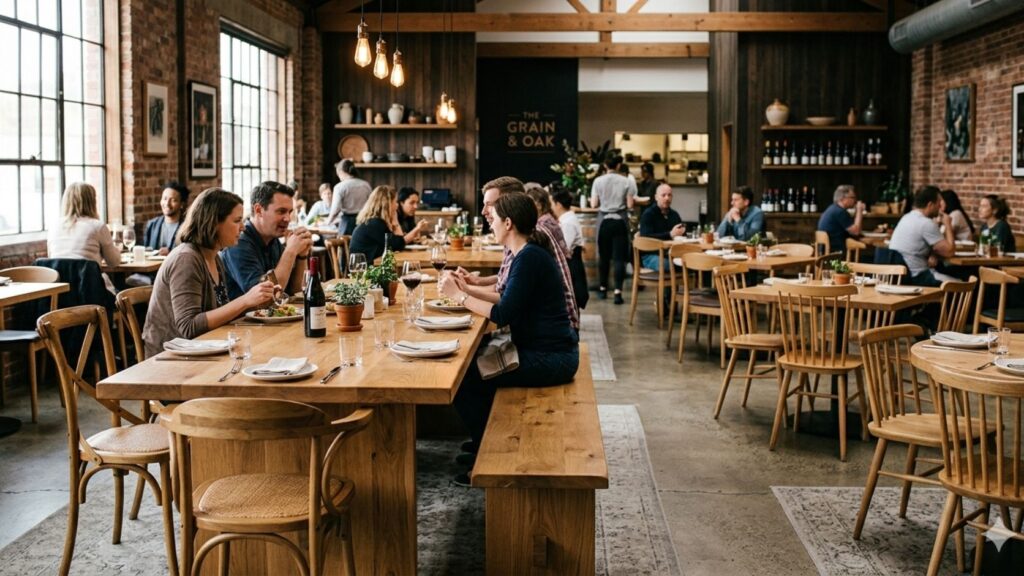
Passo 1 – Planeamento da disposição do restaurante e conceção do mobiliário
Antes do início da produção, um profissional fabricante de mobiliário para restaurantes Primeiro, analisa o ambiente do restaurante.
Os engenheiros de fábrica costumam avaliar:
- Conceito de restaurante
- Metas de capacidade de lugares sentados
- Fluxo de movimentação dos clientes
- Requisitos relativos ao espaçamento entre tabelas
- Estilo interior da marca
- Necessidades de conforto ergonómico
Por exemplo:
Mobiliário para cafés
Os cafés costumam exigir:
- Texturas de madeira aconchegantes
- Estofos macios
- Configurações compactas de lugares
- Estética adaptada às redes sociais
Mobiliário para restaurantes de fast food
Os estabelecimentos de fast-food dão prioridade a:
- Durabilidade
- Limpeza rápida
- Assentos compactos
- Elevada eficiência de rotação
Mobiliário para hotéis e restaurantes
O mobiliário de sala de jantar dos hotéis costuma destacar:
- Acabamentos de alta qualidade
- Disposições modulares
- Estofos de luxo
- Assentos multifuncionais
Nesta fase, os fabricantes costumam fornecer:
- Desenhos em CAD
- Plantas em 3D
- Renderizações de mobiliário
- Recomendações para o planeamento do espaço
Um planeamento adequado reduz o desperdício de espaço e melhora a rentabilidade do restaurante.
Passo 2 – Seleção de materiais para mobiliário de restaurantes comerciais
A escolha dos materiais é uma das principais diferenças entre o mobiliário residencial e mobiliário para restaurantes comerciais.
Os materiais de má qualidade deterioram-se rapidamente em ambientes de restauração.
Materiais para estruturas de madeira
Entre os materiais de madeira mais comuns utilizados no mobiliário de restaurantes contam-se:
Madeira maciça
Recomendado para:
- Restaurantes de luxo
- Hotéis
- Cafés
Vantagens:
- Aspecto de alta qualidade
- Grande durabilidade
- Textura natural
Contraplacado comercial
Amplamente utilizado para:
- Lugares nas cabines
- Mobiliário estofado
- Estruturas de cadeiras de jantar
Espessura recomendada:
| Componente de mobiliário | Espessura recomendada |
|---|---|
| Estrutura do stand | 12–18 mm |
| Estrutura da cadeira | 12–15 mm |
| Painel de suporte da mesa | 18–25 mm |
A madeira compensada comercial oferece melhor resistência à humidade e estabilidade dimensional.
Materiais para estruturas metálicas
O mobiliário de restaurantes utiliza frequentemente:
- Aço inoxidável
- Aço com revestimento em pó
- Estruturas de ferro
- Alumínio
Espessura recomendada da moldura:
| Tipo de estrutura | Espessura recomendada |
|---|---|
| Estrutura da cadeira | 1,2–1,5 mm |
| Base da mesa | 1,5–2 mm |
| Apoio ao stand | 1,5–2 mm |
As estruturas mais resistentes reduzem a oscilação e aumentam a vida útil.
Passo 3 – Densidade da espuma e fabrico de estofos
O conforto é um dos fatores mais importantes no fabrico de mobiliário para restaurantes.
Muitas cadeiras de restaurante baratas estragam-se porque a espuma de baixa densidade se deforma ao fim de apenas alguns meses.
Densidade recomendada da espuma
| Tipo de mobiliário | Densidade recomendada |
|---|---|
| Mesas em cabines de restaurante | 35–40 kg/m³ |
| Cadeiras de jantar | 30–35 kg/m³ |
| Lugares sentados no hotel | 35–45 kg/m³ |
| Lugares no balcão | 30–35 kg/m³ |
A espuma de alta densidade melhora:
- Conforto dos assentos
- Retenção da forma
- Durabilidade comercial
- Satisfação do cliente
Materiais para estofos
As opções de estofos mais comuns incluem:
Couro PU
Ideal para:
- Restaurantes
- Cadeias de fast food
- Restaurantes de hot pot
Vantagens:
- Limpeza fácil
- Resistência à água
- Preços acessíveis
Estofos em tecido
Ideal para:
- Cafés
- Restaurantes de hotéis
- Espaços gastronómicos de luxo
Vantagens:
- Aspecto mais suave
- Sensação de luxo
- Mais opções de textura
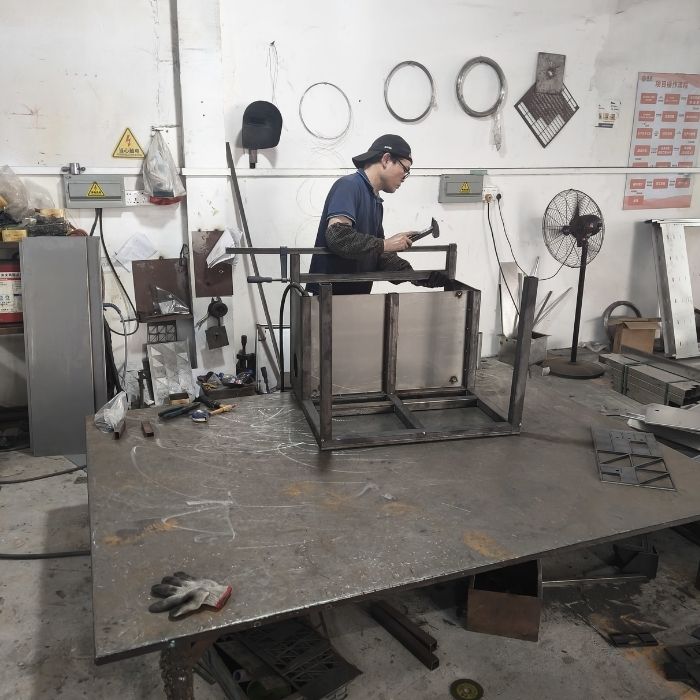
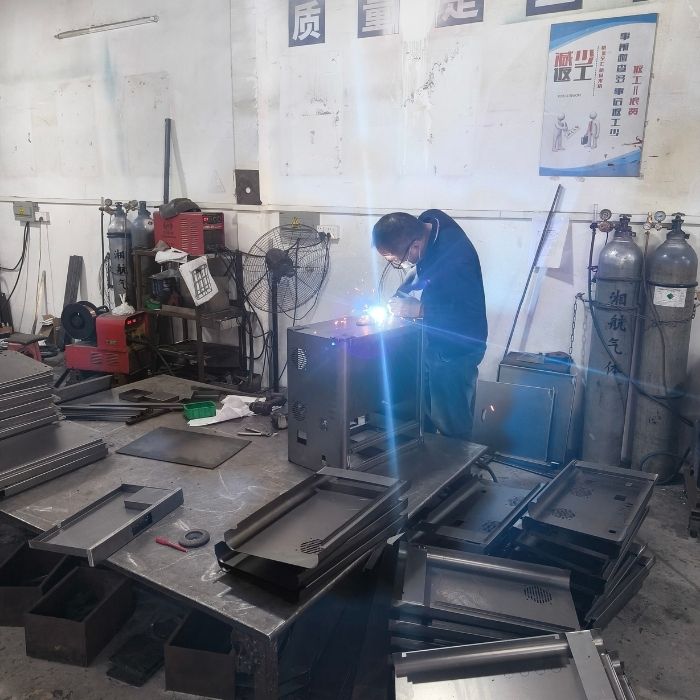
Passo 4 – Corte, soldadura e produção da estrutura
Depois de selecionados os materiais, inicia-se o processo de fabrico.
Os painéis de madeira são cortados com sistemas CNC para garantir a precisão.
As armações metálicas passam por:
- Corte a laser
- Dobradura de tubos
- Soldadura
- Retificação
- Acabamento de superfícies
Nesta fase, as fábricas garantem:
- Estabilidade da estrutura
- Apoio ao peso
- Dimensões uniformes
- Bordas suaves
Uma soldadura mal feita faz com que, muitas vezes, as cadeiras de restaurante fiquem instáveis ou se partam devido a uma utilização comercial intensiva.
As fábricas especializadas em mobiliário para restaurantes reforçam as juntas para garantir uma maior durabilidade.
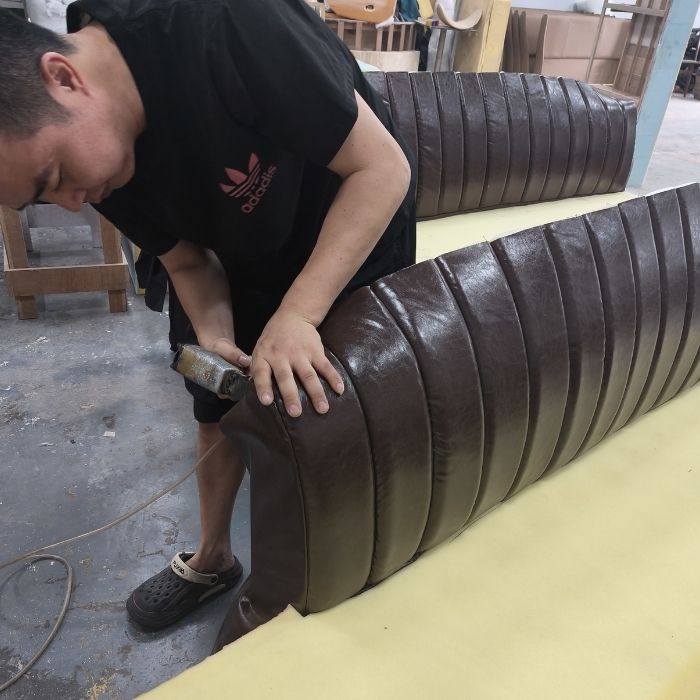
Passo 5 – Estofamento e montagem
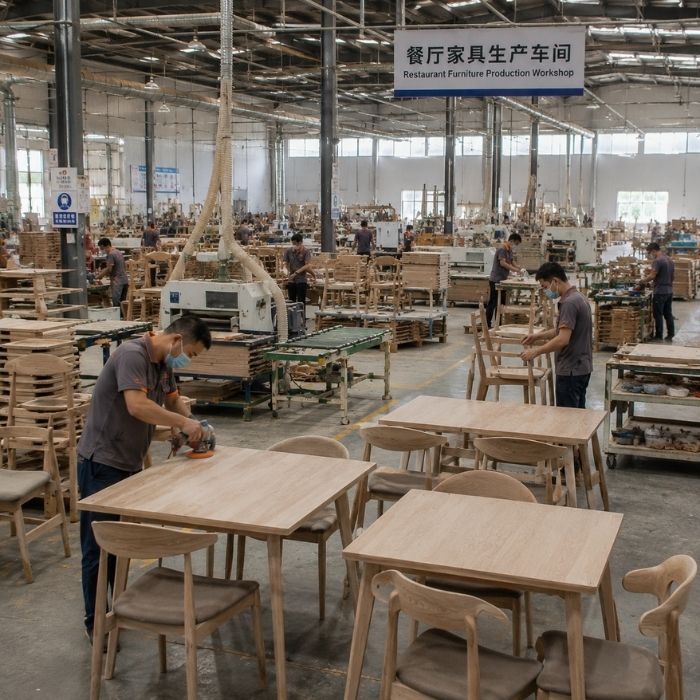
Assim que as estruturas internas estiverem concluídas, dá-se início à produção dos estofos.
A espuma é cortada com dimensões precisas e aplicada em:
- Lugares nas cabines
- Cadeiras de jantar
- Bancos de bar
- Assentos de sala de estar
- Mobiliário para o átrio do hotel
Os trabalhadores preenchem então:
- Costura
- Embalagem em tecido
- Modelagem de almofadas
- Acabamento das arestas
A atenção aos detalhes do estofo influencia fortemente a perceção da qualidade do mobiliário.
Passo 6 – Inspeção de qualidade e ensaios comerciais
Fiável fabricantes de mobiliário para restaurantes aplicar um controlo de qualidade rigoroso antes do envio.
Os testes habituais incluem:
Testes de capacidade de carga
As cadeiras comerciais têm de suportar uma utilização intensiva e repetida.
Testes de estabilidade
Verifica-se se as mesas e as cadeiras estão a balançar.
Ensaios de recuperação de espuma
Garante que as almofadas mantenham a elasticidade.
Inspeção de superfícies
Verificações:
- Arranhões
- Marcas de soldadura
- Defeitos no estofo
- Inconsistências na pintura
Inspeção dimensional
Garante a consistência entre lotes nos projetos de cadeias de restaurantes.
Um controlo de qualidade rigoroso minimiza os problemas pós-venda.
Erros comuns que os proprietários de restaurantes cometem ao comprar mobiliário
Muitos projetos de restaurantes fracassam porque as decisões relativas à aquisição de mobiliário se centram apenas no preço ou na aparência.
Escolher mobiliário para a casa
O mobiliário doméstico não costuma ter a durabilidade do mobiliário comercial.
Ignorar a ergonomia
Uma altura inadequada do assento ou ângulos desconfortáveis do encosto reduzem o conforto do cliente.
Dimensões recomendadas:
| Artigo | Especificações recomendadas |
|---|---|
| Altura do assento | 43–46 cm |
| Profundidade do assento | 48–50 cm |
| Ângulo do encosto | 100°–105° |
| Espessura da almofada | 5–8 cm |
Comprar espuma de baixa densidade
Espuma por baixo 25 kg/m³ desmorona-se rapidamente.
Ignorar os requisitos de manutenção
O mobiliário deve permitir:
- Limpeza rápida
- Resistência à humidade
- Reparação fácil
Os melhores tipos de mobiliário para restaurantes em projetos comerciais
As fábricas especializadas em mobiliário para restaurantes produzem habitualmente:
Lugares em cabines de restaurante
Ideal para:
- Restaurantes
- Cadeias de restaurantes de hot pot
- Restaurantes fast-casual
Vantagens:
- Maior privacidade
- Aproveitamento do espaço
- Aspecto de alta qualidade
Mobiliário para cafés
Opções populares:
- Cadeiras estofadas
- Mesas de jantar em madeira
- Sistemas de assentos compactos
Mobiliário de bar
Normalmente inclui:
- Bancos de bar
- Assentos de sala de estar
- Mesas com estrutura metálica
Mobiliário para o átrio do hotel
Requisitos:
- Estofos de alta qualidade
- Acabamentos elegantes
- Durabilidade a longo prazo
Por que razão trabalhar com um fabricante de mobiliário personalizado para restaurantes?
Os fabricantes profissionais oferecem:
- Personalização OEM e ODM
- Materiais de qualidade comercial
- Apoio ao planeamento do layout
- Capacidade de produção em grande escala
- Controlo de qualidade estável
- Soluções de embalagem para exportação
Isto ajuda as cadeias de restaurantes a manter a consistência da qualidade, reduzindo simultaneamente os custos de substituição a longo prazo.
Resumo final de referência para a compra
Ao escolher um fábrica de mobiliário personalizado para restaurantes, concentre-se em:
| Artigo | Recomendação |
|---|---|
| Densidade da espuma | 30–40 kg/m³ |
| Altura do assento | 43–46 cm |
| Espessura da madeira compensada | 12–18 mm |
| Espessura da estrutura de aço | 1,2–2 mm |
| Estofos | De nível comercial |
| Processo de controlo de qualidade | Obrigatório |
O mobiliário bem fabricado melhora:
- Conforto do cliente
- Identidade visual do restaurante
- Eficiência de limpeza
- Vida útil do mobiliário
- Taxa de ocupação dos lugares
- Rentabilidade a longo prazo
Acima de tudo, o mobiliário de qualidade para restaurantes proporciona uma melhor experiência gastronómica e reforça o desempenho operacional.
Sobre o fabricante de mobiliário para restaurantes
Na qualidade de profissional fabricante de mobiliário para restaurantes, oferecemos soluções completas para:
- Mesas em cabines de restaurante
- Cadeiras de jantar
- Mesas de jantar personalizadas
- Mobiliário de café
- Mobiliário para o átrio do hotel
- Mobiliário de bar
- Produção de mobiliário para restaurantes em regime de OEM e ODM
Desde o design ergonómico do mobiliário até à produção de nível comercial, ajudamos restaurantes, cafés, hotéis e projetos do setor da hotelaria a criar ambientes de refeições duradouros, confortáveis e visualmente coerentes, adaptados às necessidades do mercado global.